Want to be in the loop?
subscribe to
our notification
Business News
HANOI CITY PREPARES US$$1.5 BILLION METRO EXTENSION

Hanoi Metro trains at the Lang Station in Dong Da District - PHOTO: VNA
HCMC – Hanoi City will hold an international market consultation next month for the over-US$1.5-billion extension of Metro Line 2A linking the city center with the satellite urban area of Xuan Mai, the Hanoi Metropolitan Railway Management Board (MRB) said.
The Early Market Engagement (EME) event will take place in Hanoi on June 18-19 ahead of formal bidding procedures for the project.
The event, organized with support from the Asian Infrastructure Investment Bank (AIIB), is open to contractors, suppliers, consultants and other potential partners with experience in urban railway projects.
MRB estimated the project’s preliminary cost at more than US$1.5 billion. Funding is expected to come from AIIB loans and counterpart capital from the Vietnamese Government.
A feasibility study and front-end engineering design (FEED) began in February 2026 and are scheduled for completion in October 2026.
The study covers engineering design, environmental and social impact assessments, resettlement planning, implementation strategy and procurement plans.
MRB said the consultation process aims to gather feedback on project design, contract packaging, risk allocation and technical solutions before finalizing the bidding structure.
The Metro 2A extension is part of the first phase of Hanoi’s three-stage urban railway development plan.
Under the preliminary plan, the elevated line will run about 20 kilometers along National Highway 6, which is being expanded. The route will have 12 elevated stations, 13 four-car train sets and a depot near Xuan Mai station covering about 8.3 hectares.
The project is designed to be fully compatible with the existing Cat Linh-Ha Dong Metro Line 2A.
According to preliminary assessments, the line will directly serve around 500,000 residents along the corridor and help reduce traffic congestion on National Highway 6 and the Mai Linh Bridge gateway area in southwestern Hanoi.
MRB is studying an engineering, procurement and construction (EPC) contract model covering civil works, railway systems and rolling stock. The agency also plans to appoint a project management consultant to oversee implementation and progress control.
Prequalification documents for the EPC package are expected to be issued in the fourth quarter of this year, with the contract targeted for award in the fourth quarter of 2027.
During the EME event, the first day will focus on Hanoi’s urban railway development strategy, the existing Cat Linh-Ha Dong line, investment plans for the extension project, and procurement policies of AIIB and Vietnam.
Source: The Saigon Times
Related News
VIETNAM ECONOMY INVESTMENT
HCMC: ‘5+1’ MODEL AIMS TO LIFT SERVICES TO 75% OF GRDP BY 2040
High-value services are set to account for 70-75% of HCMC’s gross regional domestic product (GRDP) by 2040 under a “5+1” development model centered on the Vietnam International Financial Center in HCMC (VIFC-HCMC). The target is outlined in a recently issued plan by the HCMC government to turn the city into a major services hub for Vietnam and the region, with a focus on high-value, modern industries. The plan aims to reshape the economy toward a more efficient and sustainable structure.

PROPERTY / INDUSTRIAL ZONE
HCMC PROPOSES NO MARKUP ON OFFICIAL LAND PRICES
HCMC’s Department of Natural Resources and Environment has proposed setting the land price adjustment coefficient, known as the K factor, at 1 for households and businesses, meaning land-use fees and rents would be calculated directly from the official land price table without any upward adjustment. The proposal, included in the third draft regulation submitted by the department to the land price appraisal council, is intended to ease financial burdens on residents and businesses while supporting a recovery in the real estate market.
PROPERTY / INDUSTRIAL ZONE
TOURISM AND INFRASTRUCTURE FUEL VIETNAM'S REAL ESTATE GROWTH
According to Chung, 2026 is considered a pivotal year as the Vietnamese economy enters a new development phase with a series of new policies on socioeconomic development, planning, and infrastructure investment. Against the backdrop, the real estate market is facing significant opportunities to enter a new development cycle.
VIETNAM ECONOMY INVESTMENT
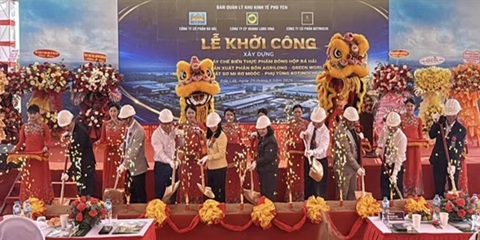
ĐẮK LẮK LAUNCHES THREE MANUFACTURING PROJECTS WORTH US$30 MILLION
Đắk Lắk Province has broken ground on three new industrial projects at Hòa Hiệp 1 Industrial Park with a combined investment of nearly VNĐ790 billion (US$30.2 million). The projects are the Agrilong–Green World Fertiliser Plant, the Bá Hải Canned Food Processing Plant, and the Kotinochi Phú Yên Semi-Trailer and Spare Parts Manufacturing Plant. The investors are Hoang Long Vina JSC, Ba Hai JSC, and Kotinochi JSC, respectively.
INFRASTRUCTURE / CONSTRUCTION / LOGISTIC / PORT
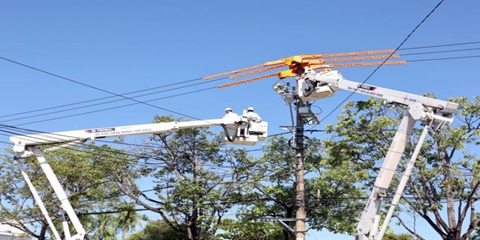
SMART ENERGY INFRASTRUCTURE CRITICAL FOR GREEN GROWTH
Developing smart energy infrastructure will be critical for Việt Nam to achieve its green growth ambitions, as the global energy transition has entered a new phase that requires more flexible, resilient and digitally enabled energy systems. At the Smart Energy Infrastructure Development Forum in Hà Nội, experts said that countries must move beyond simply expanding renewable power generation and focus on building smarter energy systems.
VIETNAM ECONOMY INVESTMENT
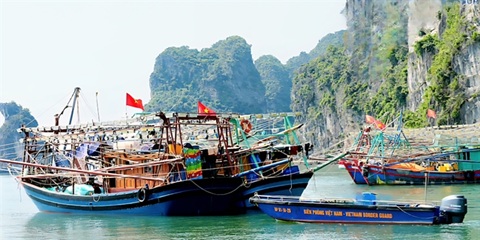
QUẢNG NINH ADJUSTS GRDP GROWTH TARGETS FOR EACH QUARTER
The northern province of Quảng Ninh posted broad-based socio-economic expansion in the first half and is pushing to deliver full-year gross regional domestic product (GRDP) growth above 13 per cent, an all-time high. To achieve more than VNĐ100 trillion (US$3.7 billion) in state budget revenue this year, the provincial People's Committee has set a target of 13.21 per cent GRDP growth, with quarterly growth projected at 12.58 per cent in the second quarter, 15.48 per cent in the third and 14.86 per cent in the fourth.
Events Sponsors