Want to be in the loop?
subscribe to
our notification
Business News
HANOI CITY WANTS NIGHTTIME ECONOMY TO CONTRIBUTE 5% TO GRDP BY 2030

Visitors and local residents inspect lanterns and Mid-Autumn Festival decorations at a night market - PHOTO: NGOC LUONG
HCMC – Hanoi City aims for its nighttime economy to contribute around 5% of the city’s gross regional domestic product (GRDP) by 2030 under a new development plan approved by the municipal government.
The Hanoi People’s Committee approved the plan for 2026-2030, with a vision to 2045, on May 9. The city expects the nighttime economy to become a new growth driver for its service and tourism sectors.
The plan covers economic activities operating from 6 p.m. to 6 a.m. Authorities aim to expand services by leveraging Hanoi’s cultural, heritage, tourism and creative industry assets while maintaining urban order, public security and residents’ quality of life.
Hanoi expects to receive 35 million to 40 million visitors in 2026. International arrivals are projected to rise further as tourism recovers and more night-time tourism products are introduced, according to the plan.
The city targets night-time spending by tourists at 25% to 30% of total visitor spending by 2030. Average stays are expected to increase to between 2.5 and 3.5 days.
Authorities plan to establish three to five key nighttime economy zones. These include a cultural and heritage area in Hoan Kiem and Cua Nam, an entertainment area in Tay Ho, and a creative and industrial zone in Gia Lam.
The city also plans to develop three to five signature night events and products. Night cultural tourism offerings are expected to be introduced at all nationally recognized special heritage sites in Hanoi.
The plan identifies culture, tourism and creative industries as the foundation of the nighttime economy. Hanoi also intends to apply digital technology and smart-city management systems to oversee night-time activities.
Authorities are studying the deployment of AI-powered cameras and real-time sensors to improve security, fire prevention and crowd management at busy locations.
The city plans to build a digital ecosystem for the nighttime economy, including databases, digital maps and integrated management systems linking authorities, businesses and residents. Digital payments, e-commerce and multi-platform business models will also be promoted.
Hanoi currently has 11 night tours and nine pedestrian streets. Existing nighttime economy activities include heritage tours, art performances, walking streets and late-night food spaces.
Source: The Saigon Times
Related News

MEMBER CORNER / PROMOTIONS
SOME THINGS IN LIFE ARE SIMPLY IRREPLACEABLE.
They all deserve the highest level of protection. With SentrySafe, you’re not just storing valuables - you’re protecting what truly matters. Designed for durability, security, and peace of mind, every detail is built to keep your belongings safe over time. Because true comfort comes from knowing everything important is secured.
INFRASTRUCTURE / CONSTRUCTION / LOGISTIC / PORT
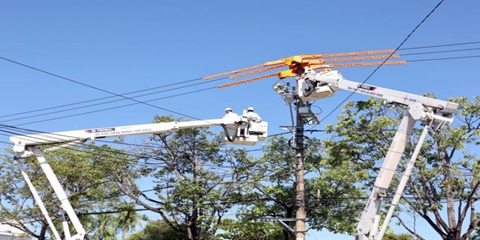
SMART ENERGY INFRASTRUCTURE CRITICAL FOR GREEN GROWTH
Developing smart energy infrastructure will be critical for Việt Nam to achieve its green growth ambitions, as the global energy transition has entered a new phase that requires more flexible, resilient and digitally enabled energy systems. At the Smart Energy Infrastructure Development Forum in Hà Nội, experts said that countries must move beyond simply expanding renewable power generation and focus on building smarter energy systems.
VIETNAM ECONOMY INVESTMENT
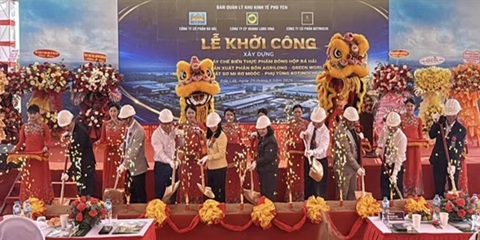
ĐẮK LẮK LAUNCHES THREE MANUFACTURING PROJECTS WORTH US$30 MILLION
Đắk Lắk Province has broken ground on three new industrial projects at Hòa Hiệp 1 Industrial Park with a combined investment of nearly VNĐ790 billion (US$30.2 million). The projects are the Agrilong–Green World Fertiliser Plant, the Bá Hải Canned Food Processing Plant, and the Kotinochi Phú Yên Semi-Trailer and Spare Parts Manufacturing Plant. The investors are Hoang Long Vina JSC, Ba Hai JSC, and Kotinochi JSC, respectively.

PROPERTY / INDUSTRIAL ZONE
HCMC PROPOSES NO MARKUP ON OFFICIAL LAND PRICES
HCMC’s Department of Natural Resources and Environment has proposed setting the land price adjustment coefficient, known as the K factor, at 1 for households and businesses, meaning land-use fees and rents would be calculated directly from the official land price table without any upward adjustment. The proposal, included in the third draft regulation submitted by the department to the land price appraisal council, is intended to ease financial burdens on residents and businesses while supporting a recovery in the real estate market.
PROPERTY / INDUSTRIAL ZONE
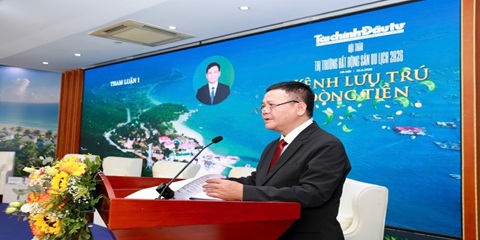
TOURISM AND INFRASTRUCTURE FUEL VIETNAM'S REAL ESTATE GROWTH
According to Chung, 2026 is considered a pivotal year as the Vietnamese economy enters a new development phase with a series of new policies on socioeconomic development, planning, and infrastructure investment. Against the backdrop, the real estate market is facing significant opportunities to enter a new development cycle.
VIETNAM ECONOMY INVESTMENT
HCMC: ‘5+1’ MODEL AIMS TO LIFT SERVICES TO 75% OF GRDP BY 2040
High-value services are set to account for 70-75% of HCMC’s gross regional domestic product (GRDP) by 2040 under a “5+1” development model centered on the Vietnam International Financial Center in HCMC (VIFC-HCMC). The target is outlined in a recently issued plan by the HCMC government to turn the city into a major services hub for Vietnam and the region, with a focus on high-value, modern industries. The plan aims to reshape the economy toward a more efficient and sustainable structure.
Events Sponsors