Want to be in the loop?
subscribe to
our notification
Business News
HCMC TARGETS 181,000 NEW SOCIAL HOUSING UNITS BY 2030

An aerial view of a social housing project in HCMC – PHOTO: LE VU
HCMC – HCMC plans to build more than 181,000 social housing units between 2026 and 2030, after completing nearly 17,900 units over the past five years, city officials said.
Le Duc Anh, deputy head of the Housing and Real Estate Market Management Division under the city’s Department of Construction, said at a socio-economic press briefing in HCMC on June 4 that the city was stepping up efforts to expand social housing supply.
Under targets assigned by the Government, HCMC aims to develop about 199,400 social housing units between 2021 and 2030.
The city completed 17,902 units during the 2021-2025 period. For 2026-2030, the city plans to mobilize additional resources and deliver more than 181,000 social housing units to meet growing housing demand.
Several social housing projects are being developed across areas belonging to the former HCMC, Binh Duong and Ba Ria-Vung Tau. Many of these projects are already under construction and are expected to be completed in 2026 and 2027, adding tens of thousands of housing units.
To ensure transparency in the sale and lease-purchase of social housing, the Department of Construction has instructed developers to fully disclose project information, selling prices, eligibility criteria, application periods and approval results in accordance with the 2023 Housing Law, Decree No. 100/2024 and related regulations.
The department said it would continue coordinating with relevant agencies, local authorities and developers to accelerate social housing projects, while improving public access to information and housing support programs to help eligible residents benefit from government policies and strengthen social welfare across the city.
Source: The Saigon Times
Related News
VIETNAM ECONOMY INVESTMENT
HCMC: ‘5+1’ MODEL AIMS TO LIFT SERVICES TO 75% OF GRDP BY 2040
High-value services are set to account for 70-75% of HCMC’s gross regional domestic product (GRDP) by 2040 under a “5+1” development model centered on the Vietnam International Financial Center in HCMC (VIFC-HCMC). The target is outlined in a recently issued plan by the HCMC government to turn the city into a major services hub for Vietnam and the region, with a focus on high-value, modern industries. The plan aims to reshape the economy toward a more efficient and sustainable structure.

PROPERTY / INDUSTRIAL ZONE
HCMC PROPOSES NO MARKUP ON OFFICIAL LAND PRICES
HCMC’s Department of Natural Resources and Environment has proposed setting the land price adjustment coefficient, known as the K factor, at 1 for households and businesses, meaning land-use fees and rents would be calculated directly from the official land price table without any upward adjustment. The proposal, included in the third draft regulation submitted by the department to the land price appraisal council, is intended to ease financial burdens on residents and businesses while supporting a recovery in the real estate market.
PROPERTY / INDUSTRIAL ZONE
TOURISM AND INFRASTRUCTURE FUEL VIETNAM'S REAL ESTATE GROWTH
According to Chung, 2026 is considered a pivotal year as the Vietnamese economy enters a new development phase with a series of new policies on socioeconomic development, planning, and infrastructure investment. Against the backdrop, the real estate market is facing significant opportunities to enter a new development cycle.
VIETNAM ECONOMY INVESTMENT
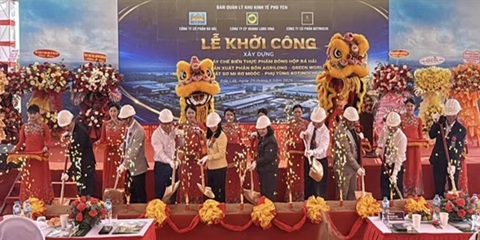
ĐẮK LẮK LAUNCHES THREE MANUFACTURING PROJECTS WORTH US$30 MILLION
Đắk Lắk Province has broken ground on three new industrial projects at Hòa Hiệp 1 Industrial Park with a combined investment of nearly VNĐ790 billion (US$30.2 million). The projects are the Agrilong–Green World Fertiliser Plant, the Bá Hải Canned Food Processing Plant, and the Kotinochi Phú Yên Semi-Trailer and Spare Parts Manufacturing Plant. The investors are Hoang Long Vina JSC, Ba Hai JSC, and Kotinochi JSC, respectively.
INFRASTRUCTURE / CONSTRUCTION / LOGISTIC / PORT
SMART ENERGY INFRASTRUCTURE CRITICAL FOR GREEN GROWTH
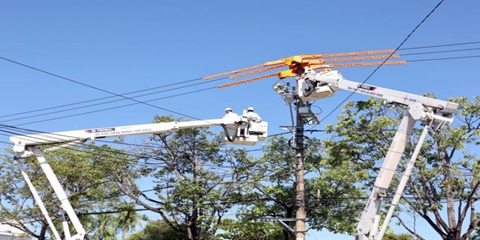
Developing smart energy infrastructure will be critical for Việt Nam to achieve its green growth ambitions, as the global energy transition has entered a new phase that requires more flexible, resilient and digitally enabled energy systems. At the Smart Energy Infrastructure Development Forum in Hà Nội, experts said that countries must move beyond simply expanding renewable power generation and focus on building smarter energy systems.
VIETNAM ECONOMY INVESTMENT
QUẢNG NINH ADJUSTS GRDP GROWTH TARGETS FOR EACH QUARTER
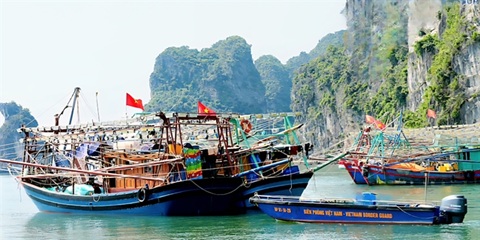
The northern province of Quảng Ninh posted broad-based socio-economic expansion in the first half and is pushing to deliver full-year gross regional domestic product (GRDP) growth above 13 per cent, an all-time high. To achieve more than VNĐ100 trillion (US$3.7 billion) in state budget revenue this year, the provincial People's Committee has set a target of 13.21 per cent GRDP growth, with quarterly growth projected at 12.58 per cent in the second quarter, 15.48 per cent in the third and 14.86 per cent in the fourth.
Events Sponsors