Want to be in the loop?
subscribe to
our notification
Business News
LAW ON DEPOSIT INSURANCE TO BE AMENDED
According to the SBV, after 12 years of implementing the Law on Deposit Insurance, there have been a number of difficulties and problems that need to be resolved to further enhance the role of the Deposit Insurance of Vietnam (DIV).
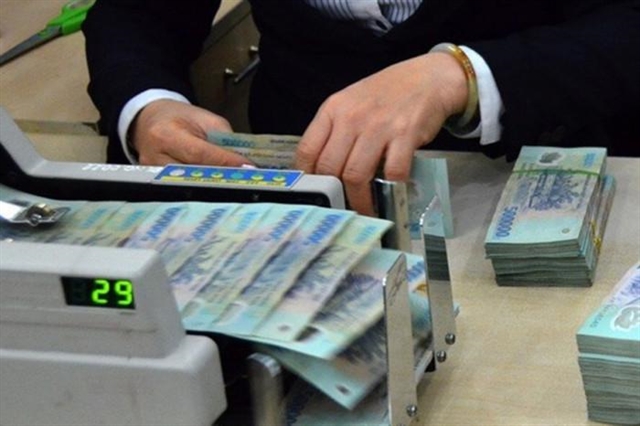
Amendment of the Law on Deposit Insurance will contribute to maintaining the stability and sustainable development of the credit institution system. Photo vneconomy.vn
HÀ NỘI — The State Bank of Vietnam (SBV) has recently submitted to the Government a proposal to amend the Law on Deposit Insurance.
According to the SBV, after 12 years of implementing the Law on Deposit Insurance, there have been a number of difficulties and problems that need to be resolved to further enhance the role of the Deposit Insurance of Vietnam (DIV), ensure the deposit insurance policy to be implemented effectively, and better protect the legitimate rights and interests of depositors.
The SBV expects the changes will contribute to maintaining the stability and sustainable development of the credit institution system.
Under the proposal, the SBV proposes to expand investment forms of deposit insurance organisations in the direction of expanding investment forms. Specifically, the SBV proposes to allow the DIV to buy long-term bonds of credit institutions that receive compulsory transfers.
According to the current regulations, the DIV is allowed to use temporarily idle capital to buy government bonds and SBV’s bills, as well as deposit money at the SBV, to ensure capital safety.
The SBV’s data shows 99 per cent of the total temporarily idle capital of the DIV is currently invested in government bonds as yield of the government bonds is higher than interest rates of SBV’s bills and SBV’s deposits.
However, investment in government bonds has been difficult in recent years and revenue from government bonds has decreased due to low interest rates. This has greatly affected the revenue of the DIV. According to data provided by the DIV, its profitability of idle capital has decreased gradually, from 9.41 per cent in 2013 to only 3.82 per cent in 2023.
Under the SBV’s proposals, the DIV can also participate in developing plans and proposing deposit insurance payment limits for people's credit funds and other credit institutions.
The SBV also proposes regulations to limit risks in investment activities of the DIV. Accordingly, there must be regulations on the responsibilities of the DIV in carrying out investment activities and making provisions for risk for investments according to the Government's instructions. Besides, the Government must stipulate criteria for investment portfolio, investment structure and investment methods of the DIV.
According to the Law on Credit Institutions 2024, the Vietnam Deposit Insurance is assigned a number of new tasks, including the role of participating in restructuring weak credit institutions.
Specifically, the DIV can provide special loans to specially controlled commercial banks according to the SBV’s decision. — VNS
Source: VNS
Related News

VIETNAM ECONOMY INVESTMENT
HCMC: ‘5+1’ MODEL AIMS TO LIFT SERVICES TO 75% OF GRDP BY 2040
High-value services are set to account for 70-75% of HCMC’s gross regional domestic product (GRDP) by 2040 under a “5+1” development model centered on the Vietnam International Financial Center in HCMC (VIFC-HCMC). The target is outlined in a recently issued plan by the HCMC government to turn the city into a major services hub for Vietnam and the region, with a focus on high-value, modern industries. The plan aims to reshape the economy toward a more efficient and sustainable structure.

PROPERTY / INDUSTRIAL ZONE
HCMC PROPOSES NO MARKUP ON OFFICIAL LAND PRICES
HCMC’s Department of Natural Resources and Environment has proposed setting the land price adjustment coefficient, known as the K factor, at 1 for households and businesses, meaning land-use fees and rents would be calculated directly from the official land price table without any upward adjustment. The proposal, included in the third draft regulation submitted by the department to the land price appraisal council, is intended to ease financial burdens on residents and businesses while supporting a recovery in the real estate market.

PROPERTY / INDUSTRIAL ZONE
TOURISM AND INFRASTRUCTURE FUEL VIETNAM'S REAL ESTATE GROWTH
According to Chung, 2026 is considered a pivotal year as the Vietnamese economy enters a new development phase with a series of new policies on socioeconomic development, planning, and infrastructure investment. Against the backdrop, the real estate market is facing significant opportunities to enter a new development cycle.

VIETNAM ECONOMY INVESTMENT
ĐẮK LẮK LAUNCHES THREE MANUFACTURING PROJECTS WORTH US$30 MILLION
Đắk Lắk Province has broken ground on three new industrial projects at Hòa Hiệp 1 Industrial Park with a combined investment of nearly VNĐ790 billion (US$30.2 million). The projects are the Agrilong–Green World Fertiliser Plant, the Bá Hải Canned Food Processing Plant, and the Kotinochi Phú Yên Semi-Trailer and Spare Parts Manufacturing Plant. The investors are Hoang Long Vina JSC, Ba Hai JSC, and Kotinochi JSC, respectively.
INFRASTRUCTURE / CONSTRUCTION / LOGISTIC / PORT
SMART ENERGY INFRASTRUCTURE CRITICAL FOR GREEN GROWTH
Developing smart energy infrastructure will be critical for Việt Nam to achieve its green growth ambitions, as the global energy transition has entered a new phase that requires more flexible, resilient and digitally enabled energy systems. At the Smart Energy Infrastructure Development Forum in Hà Nội, experts said that countries must move beyond simply expanding renewable power generation and focus on building smarter energy systems.

VIETNAM ECONOMY INVESTMENT
QUẢNG NINH ADJUSTS GRDP GROWTH TARGETS FOR EACH QUARTER
The northern province of Quảng Ninh posted broad-based socio-economic expansion in the first half and is pushing to deliver full-year gross regional domestic product (GRDP) growth above 13 per cent, an all-time high. To achieve more than VNĐ100 trillion (US$3.7 billion) in state budget revenue this year, the provincial People's Committee has set a target of 13.21 per cent GRDP growth, with quarterly growth projected at 12.58 per cent in the second quarter, 15.48 per cent in the third and 14.86 per cent in the fourth.
Events Sponsors