Want to be in the loop?
subscribe to
our notification
Business News
PHU QUOC MAKES UP OVER 80% OF AN GIANG’S TOURISM REVENUE

An aerial view of Phu Quoc Special Zone off the Mekong Delta province of An Giang - PHOTO: DAT THANH
HCMC – Phu Quoc Special Zone has accounted for more than 81% of An Giang Province’s tourism revenue so far this year, while attracting nearly all international visitors to the province.
Tourism revenue in An Giang has reached an estimated VND33.17 trillion in January-May, up 37.2% from a year earlier. The province has welcomed more than 13.3 million visitors, up 12.1%, while international arrivals have grown 48.4% to around 1.18 million, reported the Vietnam News Agency.
Phu Quoc has received an estimated 4.77 million visitors since early this year, up 34.2% year-on-year and equivalent to 56.1% of its annual target.
International arrivals to the island city total about 1.17 million, up 51% from a year earlier. Tourism revenue is up 50.4% to VND26.96 trillion.
In May alone, An Giang has welcomed an estimated 2.49 million visitors, up 4.3% year-on-year. International arrivals have increased 5.9% to around 166,000. Tourism revenue has expanded 2.9% to VND5.28 trillion.
Phu Quoc account for nearly 897,000 visitors in May, up 19.4% from a year earlier. International arrivals exceed 165,000, while tourism revenue totals VND4.14 trillion, up 12%.
Alongside tourism growth, An Giang has been developing policies and plans related to tourism and external relations.
The province has submitted a proposal to the prime minister, seeking approval to develop Phu Quoc into a high-quality eco-tourism and marine tourism center serving domestic and international markets.
Authorities are also preparing tourism development plans for 2025-2030 with a vision to 2035. The plans cover tourism management, investment support policies, tourism resource surveys, digital transformation, promotion activities, and international cooperation, along with preparations for APEC 2027.
Under An Giang’s 2021-2030 provincial plan with a vision to 2050, the province identified four economic corridors tied to border trade, coastal development, logistics, tourism, urban areas, and processing industries.
The province plans to divide development into five sub-regions. The eastern area centered on Long Xuyen is expected to focus on high-tech agriculture, biotechnology, and agricultural processing.
The northern area, covering Chau Doc, Cam Mountain, and Tra Su cajuput forest, is planned as a hub for eco-tourism, spiritual tourism, healthcare services, and border-gate economic activities.
The western area linked to Ha Tien is expected to develop the marine economy, renewable energy, cross-border trade, and international logistics. The remaining sub-regions cover the southern area and island groups such as Phu Quoc, Tho Chau, and Kien Hai.
Source: The Saigon Times
Related News
MEMBER CORNER / PROMOTIONS
SOME THINGS IN LIFE ARE SIMPLY IRREPLACEABLE.
They all deserve the highest level of protection. With SentrySafe, you’re not just storing valuables - you’re protecting what truly matters. Designed for durability, security, and peace of mind, every detail is built to keep your belongings safe over time. Because true comfort comes from knowing everything important is secured.
INFRASTRUCTURE / CONSTRUCTION / LOGISTIC / PORT
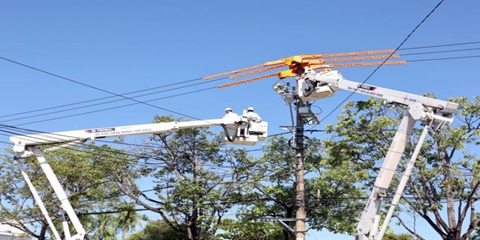
SMART ENERGY INFRASTRUCTURE CRITICAL FOR GREEN GROWTH
Developing smart energy infrastructure will be critical for Việt Nam to achieve its green growth ambitions, as the global energy transition has entered a new phase that requires more flexible, resilient and digitally enabled energy systems. At the Smart Energy Infrastructure Development Forum in Hà Nội, experts said that countries must move beyond simply expanding renewable power generation and focus on building smarter energy systems.
VIETNAM ECONOMY INVESTMENT
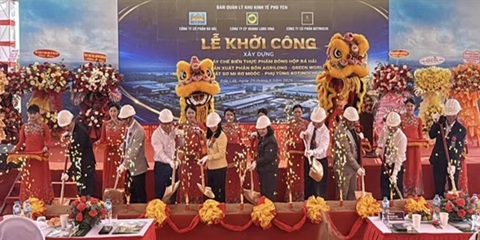
ĐẮK LẮK LAUNCHES THREE MANUFACTURING PROJECTS WORTH US$30 MILLION
Đắk Lắk Province has broken ground on three new industrial projects at Hòa Hiệp 1 Industrial Park with a combined investment of nearly VNĐ790 billion (US$30.2 million). The projects are the Agrilong–Green World Fertiliser Plant, the Bá Hải Canned Food Processing Plant, and the Kotinochi Phú Yên Semi-Trailer and Spare Parts Manufacturing Plant. The investors are Hoang Long Vina JSC, Ba Hai JSC, and Kotinochi JSC, respectively.

PROPERTY / INDUSTRIAL ZONE
HCMC PROPOSES NO MARKUP ON OFFICIAL LAND PRICES
HCMC’s Department of Natural Resources and Environment has proposed setting the land price adjustment coefficient, known as the K factor, at 1 for households and businesses, meaning land-use fees and rents would be calculated directly from the official land price table without any upward adjustment. The proposal, included in the third draft regulation submitted by the department to the land price appraisal council, is intended to ease financial burdens on residents and businesses while supporting a recovery in the real estate market.
PROPERTY / INDUSTRIAL ZONE
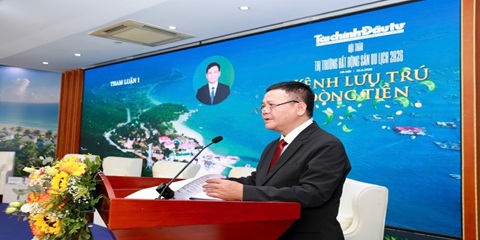
TOURISM AND INFRASTRUCTURE FUEL VIETNAM'S REAL ESTATE GROWTH
According to Chung, 2026 is considered a pivotal year as the Vietnamese economy enters a new development phase with a series of new policies on socioeconomic development, planning, and infrastructure investment. Against the backdrop, the real estate market is facing significant opportunities to enter a new development cycle.
VIETNAM ECONOMY INVESTMENT
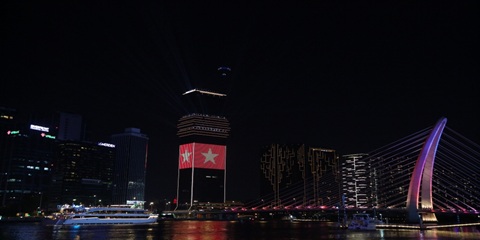
HCMC: ‘5+1’ MODEL AIMS TO LIFT SERVICES TO 75% OF GRDP BY 2040
High-value services are set to account for 70-75% of HCMC’s gross regional domestic product (GRDP) by 2040 under a “5+1” development model centered on the Vietnam International Financial Center in HCMC (VIFC-HCMC). The target is outlined in a recently issued plan by the HCMC government to turn the city into a major services hub for Vietnam and the region, with a focus on high-value, modern industries. The plan aims to reshape the economy toward a more efficient and sustainable structure.
Events Sponsors