Want to be in the loop?
subscribe to
our notification
Business News
TRAVEL UPDATE: CAMBODIA INTRODUCES TEMPORARY VISA-FREE ENTRY FOR PRC PASSPORT HOLDERS (INCLUDING HONG KONG AND MACAU)

According to the Ministry of Tourism of the Kingdom of Cambodia, holders of passports issued by the People's Republic of China (PRC), including Mainland China, Hong Kong, and Macau, will be eligible for temporary visa-free entry to Cambodia from 15 June to 15 October 2026.
Key Information
• Implementation Period: 15 June 2026 – 15 October 2026
• Eligible Travelers: PRC Passport Holders (Mainland China, Hong Kong & Macau)
• Stay Duration: Up to 14 days per visit
• Multiple Entries: Permitted during the implementation period
• Requirement: Completion of Cambodia's E-Arrival Card
• Visa Fee: Exempted
The temporary measure is expected to facilitate tourism, business travel, and people-to-people exchanges between Cambodia and Chinese-speaking markets, including Hong Kong and Macau.
HKBAV members planning business trips or leisure travel to Cambodia during the implementation period are encouraged to review the latest entry requirements before departure.
Source: Ministry of Tourism of the Kingdom of Cambodia
Disclaimer: This information is provided for reference only and is based on the announcement issued by the Ministry of Tourism of the Kingdom of Cambodia. Travelers are advised to verify the latest entry requirements, eligibility criteria, and travel regulations with the relevant Cambodian authorities before making travel arrangements.
Related News
VIETNAM ECONOMY INVESTMENT
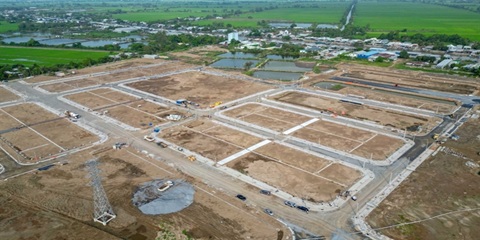
CẦN THƠ AIMS TO ADD 300 NEW BUSINESSES ANNUALLY BY 2030
Authorities in Cần Thơ City have set themselves an ambitious target of attracting 300 businesses each year through 2030 as part of broader efforts to strengthen the private sector as a key engine of economic growth. According to Vương Quốc Nam, vice chairman of its People's Committee, the city is implementing a comprehensive package of measures to foster a more dynamic private economy during the 2026 to 2030 period.
PROPERTY / INDUSTRIAL ZONE
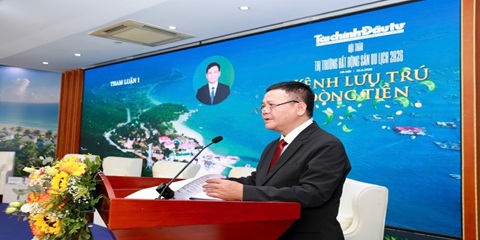
TOURISM AND INFRASTRUCTURE FUEL VIETNAM'S REAL ESTATE GROWTH
According to Chung, 2026 is considered a pivotal year as the Vietnamese economy enters a new development phase with a series of new policies on socioeconomic development, planning, and infrastructure investment. Against the backdrop, the real estate market is facing significant opportunities to enter a new development cycle.

PROPERTY / INDUSTRIAL ZONE
HCMC PROPOSES NO MARKUP ON OFFICIAL LAND PRICES
HCMC’s Department of Natural Resources and Environment has proposed setting the land price adjustment coefficient, known as the K factor, at 1 for households and businesses, meaning land-use fees and rents would be calculated directly from the official land price table without any upward adjustment. The proposal, included in the third draft regulation submitted by the department to the land price appraisal council, is intended to ease financial burdens on residents and businesses while supporting a recovery in the real estate market.
INFRASTRUCTURE / CONSTRUCTION / LOGISTIC / PORT
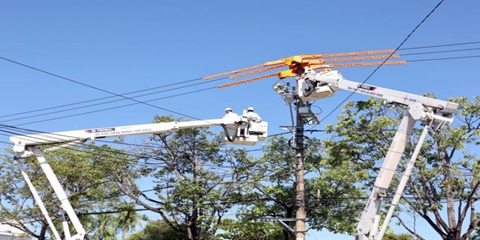
SMART ENERGY INFRASTRUCTURE CRITICAL FOR GREEN GROWTH
Developing smart energy infrastructure will be critical for Việt Nam to achieve its green growth ambitions, as the global energy transition has entered a new phase that requires more flexible, resilient and digitally enabled energy systems. At the Smart Energy Infrastructure Development Forum in Hà Nội, experts said that countries must move beyond simply expanding renewable power generation and focus on building smarter energy systems.
VIETNAM ECONOMY INVESTMENT
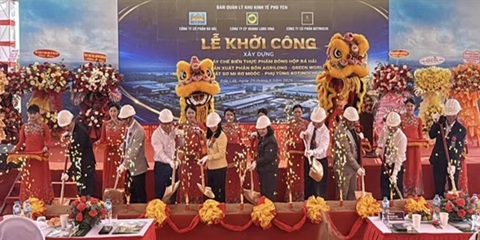
ĐẮK LẮK LAUNCHES THREE MANUFACTURING PROJECTS WORTH US$30 MILLION
Đắk Lắk Province has broken ground on three new industrial projects at Hòa Hiệp 1 Industrial Park with a combined investment of nearly VNĐ790 billion (US$30.2 million). The projects are the Agrilong–Green World Fertiliser Plant, the Bá Hải Canned Food Processing Plant, and the Kotinochi Phú Yên Semi-Trailer and Spare Parts Manufacturing Plant. The investors are Hoang Long Vina JSC, Ba Hai JSC, and Kotinochi JSC, respectively.
VIETNAM ECONOMY INVESTMENT
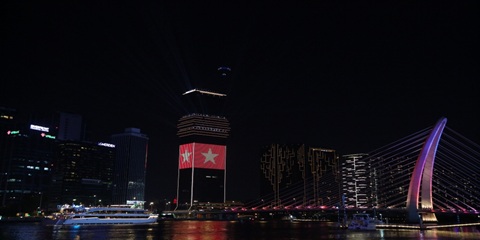
HCMC: ‘5+1’ MODEL AIMS TO LIFT SERVICES TO 75% OF GRDP BY 2040
High-value services are set to account for 70-75% of HCMC’s gross regional domestic product (GRDP) by 2040 under a “5+1” development model centered on the Vietnam International Financial Center in HCMC (VIFC-HCMC). The target is outlined in a recently issued plan by the HCMC government to turn the city into a major services hub for Vietnam and the region, with a focus on high-value, modern industries. The plan aims to reshape the economy toward a more efficient and sustainable structure.
Events Sponsors