Want to be in the loop?
subscribe to
our notification
Business News
VIET NAM DROPS COVID-19 VACCINE CERTIFICATES, QUARANTINE REQUIREMENTS FOR FOREIGN ARRIVALS
The Ministry of Health late Tuesday officially issued the long-awaited COVID-19 protocols for foreign entries into Việt Nam.
The regulations state that visitors with negative COVID tests can enjoy quarantine-free travel from day one.
Travellers entering Việt Nam via air routes will have to present proof of negative SARS-CoV-2 tests (except for children under two years old) done within 72 hours prior to departure in cases of RT-PCR/RT-LAMP or within 24 hours in cases of rapid antigen tests, and the results must be certified by the authorities of the country where the tests are conducted.
People entering via road, sea, and rail will be subjected to the same requirements.
If entrants cannot show proof of negative tests, they are required to take a test (either using RT-PCR/RT-LAMP method or rapid antigen tests) in the first 24 hours from the time of arrival.
If the results are negative, they may travel outside of their place of accommodation, with public health measures still in place, if the results are positive, they must notify health authorities for further instructions.
Children under two years old are not required to take COVID-19 tests, and they can still enter Việt Nam and take part in activities outside of the place of accommodation with their parents or relatives even if they have not been vaccinated against COVID-19 or contracted the virus before.
Arrivals must make medical declaration before entering and use Việt Nam’s COVID-19 mobile application (PC-COVID, available in both Vietnamese and English on both iOS and Android) during their entire stay according to regulations.
At the border gate, if one shows symptoms of SARS-CoV-2 infection (fever; cough; sore throat; runny nose, stuffy nose; body aches, fatigue, chills; reduced or loss of taste; reduced or loss of sense of smell; headache; diarrhoea; breathing difficulties; respiratory infection, etc.), they must immediately notify the health agency at the border gate to take medical measures as regulated.
No mandatory quarantine is required, but in the first 10 days after entry, people should self-monitor their health and if any symptoms develop, ask for assistance from the nearest medical facilities.
Visitors are asked to frequently wear masks and disinfect their hands.
People without negative COVID-19 results prior to entry are asked to not make rest stops and make contact with other people along the way from the border gate to their place of accommodation.
Some prominent omissions in the latest official set of COVID-19 rules is that there is no longer a requirement for the COVID-19 vaccination or recent recovery certificates, multiple tests required before and after entry, or the need to comply with restrictions like avoiding gathering or keeping safe distance, like in previous proposed plans from the ministry.
The guidelines, released after the country fully reopened international tourism activities and reinstated pre-pandemic entry and exit regulations, replace all other previous COVID-19 rules for foreign entries and the health ministry asks local authorities and State agencies to quickly direct the implementation of the COVID rules to avoid spreading the virus among the travellers and the community.
It is hoped the relaxed regulations will ease concerns from international tour companies who have been desperate to welcome back foreign tourists into the country after two years of severe disruptions caused by the pandemic.
With these new COVID-19 guidelines, international visitors entering Việt Nam will be “treated the same way” as domestic visitors, as Deputy Prime Minister Vũ Đức Đam has promised late Wednesday.
The health ministry also noted that the new daily COVID-19 increases in Việt Nam remains significant and Omicron variant has been circulating in the community, however, with one of the highest vaccination rates in the world, hospitalisations and deaths from the virus remain at manageable levels, and the guidelines are part of the efforts to safely adapt to, and flexibly and effectively control COVID-19.
Source: VNS
Related News
MEMBER CORNER / PROMOTIONS
SOME THINGS IN LIFE ARE SIMPLY IRREPLACEABLE.
They all deserve the highest level of protection. With SentrySafe, you’re not just storing valuables - you’re protecting what truly matters. Designed for durability, security, and peace of mind, every detail is built to keep your belongings safe over time. Because true comfort comes from knowing everything important is secured.
INFRASTRUCTURE / CONSTRUCTION / LOGISTIC / PORT
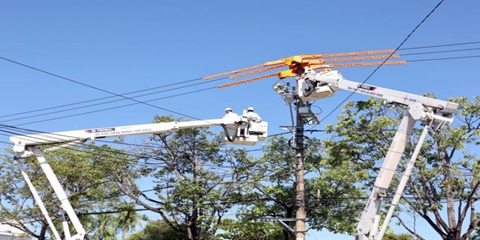
SMART ENERGY INFRASTRUCTURE CRITICAL FOR GREEN GROWTH
Developing smart energy infrastructure will be critical for Việt Nam to achieve its green growth ambitions, as the global energy transition has entered a new phase that requires more flexible, resilient and digitally enabled energy systems. At the Smart Energy Infrastructure Development Forum in Hà Nội, experts said that countries must move beyond simply expanding renewable power generation and focus on building smarter energy systems.
VIETNAM ECONOMY INVESTMENT
ĐẮK LẮK LAUNCHES THREE MANUFACTURING PROJECTS WORTH US$30 MILLION
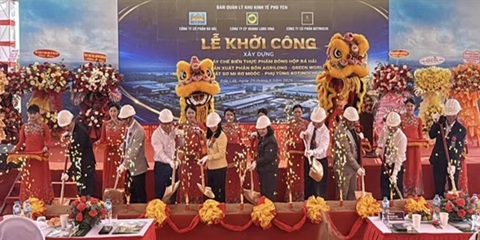
Đắk Lắk Province has broken ground on three new industrial projects at Hòa Hiệp 1 Industrial Park with a combined investment of nearly VNĐ790 billion (US$30.2 million). The projects are the Agrilong–Green World Fertiliser Plant, the Bá Hải Canned Food Processing Plant, and the Kotinochi Phú Yên Semi-Trailer and Spare Parts Manufacturing Plant. The investors are Hoang Long Vina JSC, Ba Hai JSC, and Kotinochi JSC, respectively.

PROPERTY / INDUSTRIAL ZONE
HCMC PROPOSES NO MARKUP ON OFFICIAL LAND PRICES
HCMC’s Department of Natural Resources and Environment has proposed setting the land price adjustment coefficient, known as the K factor, at 1 for households and businesses, meaning land-use fees and rents would be calculated directly from the official land price table without any upward adjustment. The proposal, included in the third draft regulation submitted by the department to the land price appraisal council, is intended to ease financial burdens on residents and businesses while supporting a recovery in the real estate market.
PROPERTY / INDUSTRIAL ZONE
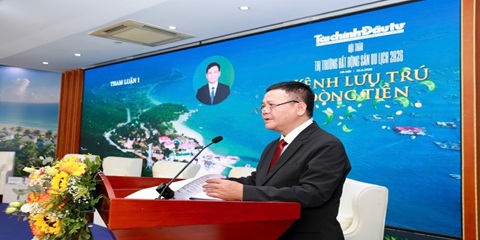
TOURISM AND INFRASTRUCTURE FUEL VIETNAM'S REAL ESTATE GROWTH
According to Chung, 2026 is considered a pivotal year as the Vietnamese economy enters a new development phase with a series of new policies on socioeconomic development, planning, and infrastructure investment. Against the backdrop, the real estate market is facing significant opportunities to enter a new development cycle.
VIETNAM ECONOMY INVESTMENT
HCMC: ‘5+1’ MODEL AIMS TO LIFT SERVICES TO 75% OF GRDP BY 2040
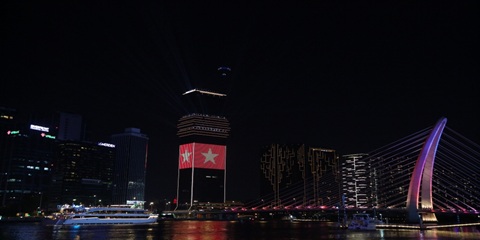
High-value services are set to account for 70-75% of HCMC’s gross regional domestic product (GRDP) by 2040 under a “5+1” development model centered on the Vietnam International Financial Center in HCMC (VIFC-HCMC). The target is outlined in a recently issued plan by the HCMC government to turn the city into a major services hub for Vietnam and the region, with a focus on high-value, modern industries. The plan aims to reshape the economy toward a more efficient and sustainable structure.
Events Sponsors