Want to be in the loop?
subscribe to
our notification
Business News
VIETNAM TARGETS SCIENCE, TECHNOLOGY AND AI AS CORE DRIVERS OF NEXT GROWTH MODEL
Vietnam is moving to place science, technology and artificial intelligence (AI) at the center of its next development model, as traditional growth engines weaken and the global economy shifts toward knowledge- and data-driven expansion.

Vietnam is preparing a strategic shift in its growth model, with policymakers and business leaders calling for science, technology and innovation to become the primary engines of future development.
At the Vietnam Economic Forum 2026, organised by the Vietnam Institute of Economics and World Economy under the Vietnam Academy of Social Sciences, Nguyen Duc Hien, Deputy Head of the Party’s Policy and Strategy Commission, said the Politburo has tasked the commission with drafting a new development framework based on science, technology, innovation and digital transformation.
The move comes as Vietnam reassesses its economic trajectory after nearly four decades of reforms. Traditional drivers such as capital investment and low-cost labor are losing effectiveness, while global growth is increasingly fueled by innovation, digital technologies and data.
From the business perspective, Nguyen Trung Chinh, Chairman of CMC Corporation, said Vietnam must urgently establish new growth engines, with the digital economy and AI at the core. He described data as a new “factor of production,” comparable to land, labor and capital.
“Data is the digital workforce and the foundation of innovation,” Chinh said, adding that AI should be treated not just as a technology, but as strategic national infrastructure with economy-wide impact.
Estimates presented at the forum suggest that, if effectively developed, the digital and AI economy could contribute up to 30% of Vietnam’s gross domestic product. By 2030, the sector could reach a value of around $80 billion, driven by productivity gains, the emergence of new industries and the “intelligentization” of economic activities.
AI is also expected to generate exponential growth, with rates ranging from 20% to 30%, and up to 50% in some sectors, providing a foundation for sustained double-digit expansion. International experience shows that economies such as the United States, China and Singapore have achieved significant gains from data- and AI-driven strategies. In Singapore, the data economy accounts for 18.6% of GDP.
However, experts cautioned that institutional reform will be critical to turning these ambitions into reality. Huynh Quyet Thang, President of Hanoi University of Science and Technology, said science, technology and digital transformation must serve as a “cross-cutting axis” of the development model, rather than a supporting component.
He called for more flexible regulatory frameworks, expanded policy experimentation and a shift from a control-oriented approach to a more facilitative and risk-tolerant mindset.
Human capital is another key factor. With a relatively young population, Vietnam has an opportunity to strengthen its workforce, particularly in digital skills and technological capabilities, while accelerating the development of digital infrastructure.
Despite broad agreement on policy direction, implementation remains a major bottleneck. Vu Sy Cuong, Associate Professor at the Academy of Finance, said Vietnam’s spending on science and technology has remained modest, at around 1–2% of the state budget, while total research and development (R&D) expenditure stands at approximately 0.4% of GDP.
Private sector participation is limited, contributing only about 0.2% of GDP, with most spending coming from state-linked enterprises. Complex administrative procedures and risk-averse governance have discouraged businesses from fully utilizing existing incentives.
“We do not lack policies; we lack mechanisms to make them work,” Cuong said.
Dang Xuan Thanh, Vice President of the Vietnam Academy of Social Sciences, said mobilizing resources for science and technology will require a coordinated approach involving the state, businesses and the market. While the government should play a leading role, the private sector must be central in allocating and deploying capital.
Simplifying procedures, reducing compliance costs and accepting managed risks will be essential to unlocking investment and accelerating innovation, he added.
As Vietnam seeks to reposition its growth model, the key challenge will be not only setting priorities, but ensuring effective implementation.
Source: VCCI
Related News

MEMBER CORNER / PROMOTIONS
SOME THINGS IN LIFE ARE SIMPLY IRREPLACEABLE.
They all deserve the highest level of protection. With SentrySafe, you’re not just storing valuables - you’re protecting what truly matters. Designed for durability, security, and peace of mind, every detail is built to keep your belongings safe over time. Because true comfort comes from knowing everything important is secured.
INFRASTRUCTURE / CONSTRUCTION / LOGISTIC / PORT
SMART ENERGY INFRASTRUCTURE CRITICAL FOR GREEN GROWTH
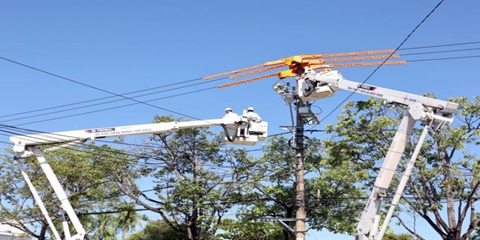
Developing smart energy infrastructure will be critical for Việt Nam to achieve its green growth ambitions, as the global energy transition has entered a new phase that requires more flexible, resilient and digitally enabled energy systems. At the Smart Energy Infrastructure Development Forum in Hà Nội, experts said that countries must move beyond simply expanding renewable power generation and focus on building smarter energy systems.

VIETNAM ECONOMY INVESTMENT
ĐẮK LẮK LAUNCHES THREE MANUFACTURING PROJECTS WORTH US$30 MILLION
Đắk Lắk Province has broken ground on three new industrial projects at Hòa Hiệp 1 Industrial Park with a combined investment of nearly VNĐ790 billion (US$30.2 million). The projects are the Agrilong–Green World Fertiliser Plant, the Bá Hải Canned Food Processing Plant, and the Kotinochi Phú Yên Semi-Trailer and Spare Parts Manufacturing Plant. The investors are Hoang Long Vina JSC, Ba Hai JSC, and Kotinochi JSC, respectively.

PROPERTY / INDUSTRIAL ZONE
HCMC PROPOSES NO MARKUP ON OFFICIAL LAND PRICES
HCMC’s Department of Natural Resources and Environment has proposed setting the land price adjustment coefficient, known as the K factor, at 1 for households and businesses, meaning land-use fees and rents would be calculated directly from the official land price table without any upward adjustment. The proposal, included in the third draft regulation submitted by the department to the land price appraisal council, is intended to ease financial burdens on residents and businesses while supporting a recovery in the real estate market.

PROPERTY / INDUSTRIAL ZONE
TOURISM AND INFRASTRUCTURE FUEL VIETNAM'S REAL ESTATE GROWTH
According to Chung, 2026 is considered a pivotal year as the Vietnamese economy enters a new development phase with a series of new policies on socioeconomic development, planning, and infrastructure investment. Against the backdrop, the real estate market is facing significant opportunities to enter a new development cycle.

VIETNAM ECONOMY INVESTMENT
HCMC: ‘5+1’ MODEL AIMS TO LIFT SERVICES TO 75% OF GRDP BY 2040
High-value services are set to account for 70-75% of HCMC’s gross regional domestic product (GRDP) by 2040 under a “5+1” development model centered on the Vietnam International Financial Center in HCMC (VIFC-HCMC). The target is outlined in a recently issued plan by the HCMC government to turn the city into a major services hub for Vietnam and the region, with a focus on high-value, modern industries. The plan aims to reshape the economy toward a more efficient and sustainable structure.
Events Sponsors