Want to be in the loop?
subscribe to
our notification
Business News
VIETNAM TO REQUIRE HEALTH DECLARATIONS FOR ALL CROSS-BORDER TRAVELERS FROM JULY 1

People entering, leaving or transiting through Vietnamese border gates will be required to submit health declarations from July 1 - PHOTO: ARCHIVES
HCMC – People entering, leaving or transiting through Vietnamese border gates will be required to submit health declarations under Government Decree No. 165/2026/ND-CP, which will take effect on July 1, 2026.
The decree was issued to provide detailed regulations and guidance for the implementation of several provisions of the Law on Disease Prevention, including health quarantine requirements for inbound, outbound and transit travelers, the Vietnam News Agency reported.
Under the regulation, inbound, outbound and transit travelers must complete health declarations either electronically or on paper using forms issued by the Ministry of Health.
Those making health declarations must provide proof of vaccination and evidence of preventive measures taken when requested by the Ministry of Health.
Health declarations will be available in both Vietnamese and English. Depending on the global disease situation, additional languages may also be used at border gates.
The decree states that health declarations must be completed within seven days before entry, exit or transit through Vietnamese border gates.
The minister of health will issue guidance on the subjects and duration of health declaration requirements at border gates for each infectious disease, based on the global disease situation and the risk of transmission into Vietnam at different times.
Regarding quarantine procedures, health quarantine officers will conduct direct and indirect observation and monitor travelers’ health conditions and body temperature using medical surveillance equipment to detect suspected infectious disease cases.
When a suspected case is identified, quarantine officers will carry out on-site inspections, including interviews, collection of epidemiological information, review of preventive measures already taken, and checks for signs and symptoms of infectious diseases.
If a person is found to require medical measures under the Law on Disease Prevention, health quarantine officers will carry out the necessary medical procedures.
Under the decree, the maximum time allowed to complete an on-site inspection for one individual is two hours.
Vietnam’s Law on Disease Prevention will take effect on July 1, 2026. Under Article 20 of the law, subjects subject to health quarantine include inbound, outbound and transit travelers, means of transport, goods, corpses, remains, ashes, biological specimens, tissues and human body parts transported across Vietnam’s borders.
Source: The Saigon Times
Related News
VIETNAM ECONOMY INVESTMENT
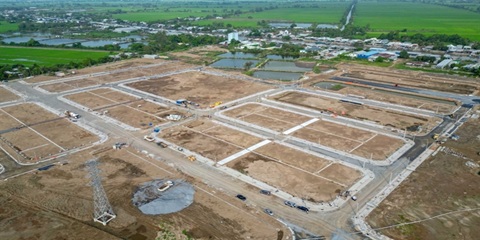
CẦN THƠ AIMS TO ADD 300 NEW BUSINESSES ANNUALLY BY 2030
Authorities in Cần Thơ City have set themselves an ambitious target of attracting 300 businesses each year through 2030 as part of broader efforts to strengthen the private sector as a key engine of economic growth. According to Vương Quốc Nam, vice chairman of its People's Committee, the city is implementing a comprehensive package of measures to foster a more dynamic private economy during the 2026 to 2030 period.
INFRASTRUCTURE / CONSTRUCTION / LOGISTIC / PORT
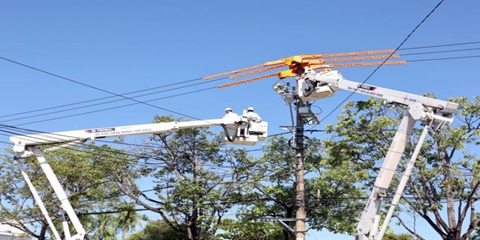
SMART ENERGY INFRASTRUCTURE CRITICAL FOR GREEN GROWTH
Developing smart energy infrastructure will be critical for Việt Nam to achieve its green growth ambitions, as the global energy transition has entered a new phase that requires more flexible, resilient and digitally enabled energy systems. At the Smart Energy Infrastructure Development Forum in Hà Nội, experts said that countries must move beyond simply expanding renewable power generation and focus on building smarter energy systems.

PROPERTY / INDUSTRIAL ZONE
TOURISM AND INFRASTRUCTURE FUEL VIETNAM'S REAL ESTATE GROWTH
According to Chung, 2026 is considered a pivotal year as the Vietnamese economy enters a new development phase with a series of new policies on socioeconomic development, planning, and infrastructure investment. Against the backdrop, the real estate market is facing significant opportunities to enter a new development cycle.

PROPERTY / INDUSTRIAL ZONE
HCMC PROPOSES NO MARKUP ON OFFICIAL LAND PRICES
HCMC’s Department of Natural Resources and Environment has proposed setting the land price adjustment coefficient, known as the K factor, at 1 for households and businesses, meaning land-use fees and rents would be calculated directly from the official land price table without any upward adjustment. The proposal, included in the third draft regulation submitted by the department to the land price appraisal council, is intended to ease financial burdens on residents and businesses while supporting a recovery in the real estate market.

VIETNAM ECONOMY INVESTMENT
ĐẮK LẮK LAUNCHES THREE MANUFACTURING PROJECTS WORTH US$30 MILLION
Đắk Lắk Province has broken ground on three new industrial projects at Hòa Hiệp 1 Industrial Park with a combined investment of nearly VNĐ790 billion (US$30.2 million). The projects are the Agrilong–Green World Fertiliser Plant, the Bá Hải Canned Food Processing Plant, and the Kotinochi Phú Yên Semi-Trailer and Spare Parts Manufacturing Plant. The investors are Hoang Long Vina JSC, Ba Hai JSC, and Kotinochi JSC, respectively.

VIETNAM ECONOMY INVESTMENT
QUẢNG NINH ADJUSTS GRDP GROWTH TARGETS FOR EACH QUARTER
The northern province of Quảng Ninh posted broad-based socio-economic expansion in the first half and is pushing to deliver full-year gross regional domestic product (GRDP) growth above 13 per cent, an all-time high. To achieve more than VNĐ100 trillion (US$3.7 billion) in state budget revenue this year, the provincial People's Committee has set a target of 13.21 per cent GRDP growth, with quarterly growth projected at 12.58 per cent in the second quarter, 15.48 per cent in the third and 14.86 per cent in the fourth.
Events Sponsors